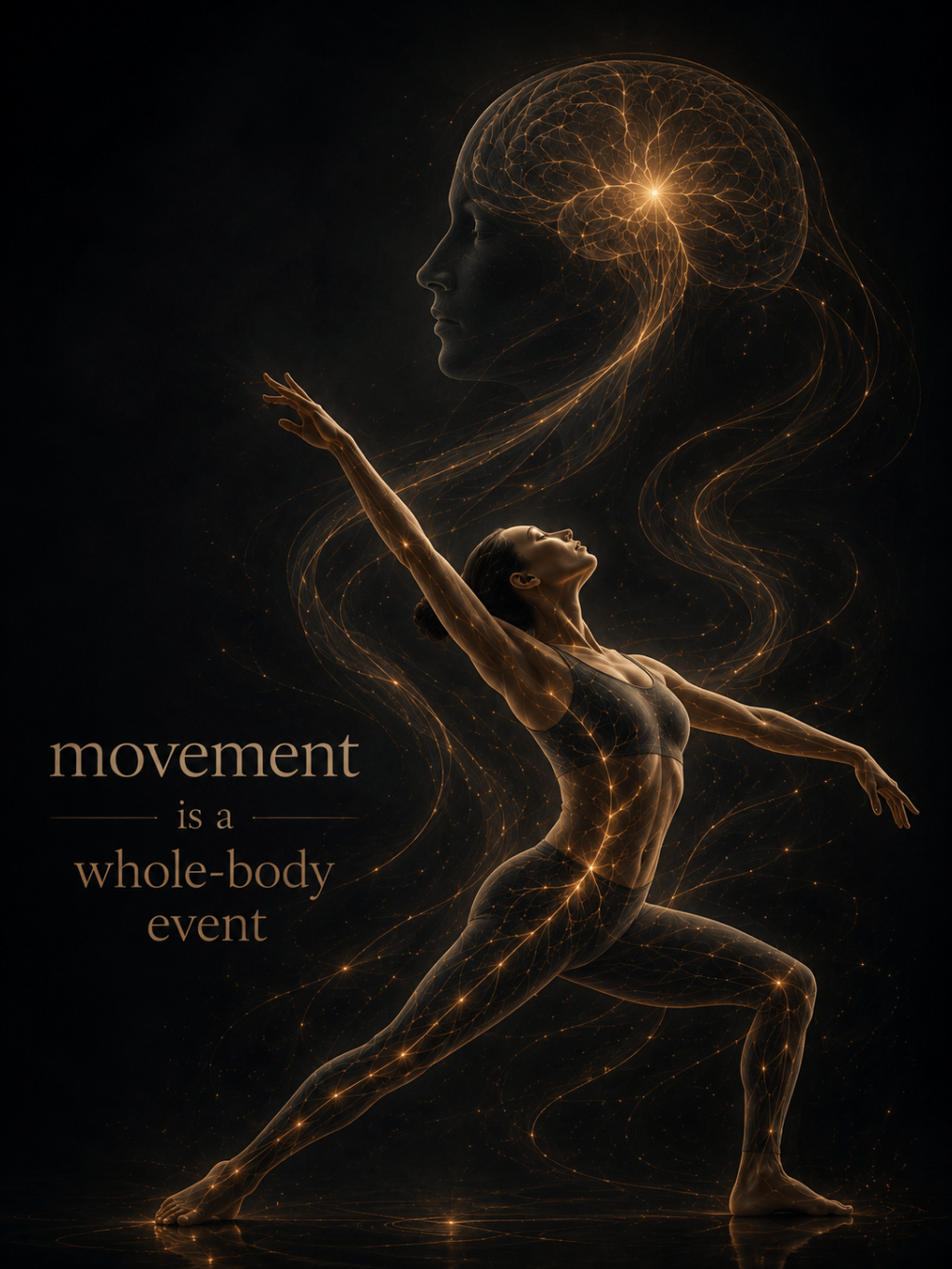
Every movement of the human body is created by the networking of its many systems. The mind thinks, and the brain activates the systems. Signaled by the brain, nerves prompt the muscles, bones, joints, and connective tissue to respond. Neuroreceptors engage to maintain balance. Also, the heart and lungs are ready to deliver the needed oxygen. These systems, in combination, coordinate thought and movement, enabling yoga practice. Yoga movement, a whole-body event.
The brain is the organized physical structure of the mind. It is observable and tangible – it can be seen and touched. However, the mind is not confined to space; there is no weight or shape. It is thought, feelings, and awareness. The mind, consciousness, is when the movement plan begins, and then the brain triggers the nerves. Let the asanas begin!
Nerve signals travel to and from the brain in response to thought or other stimuli and coordinate movement. This system signals muscles to flex or extend and can be reflexive (automatic) or intentional. That communication also plays a large role in balance and control by producing motion in muscles, bones, and joints.
It is the pull of muscles on ligaments, tendons, and ultimately bones and joints that produces movement. And with every movement, a set of muscles contracts and an opposing set extends. Additionally, the connective tissue of ligaments, tendons, and fascia aids in stabilization and coordination. These facts acknowledge that the practice of yoga is not only stretching but also includes strength-building and balance.
Balance is preserved by the neuroreceptors, the body’s sensors that know the body’s position and movement. Their job is to tell the brain where the body is in space, retain posture, and prevent falls. It is the neuroreceptors that allow humans to know where their hands and feet are without looking at them. Think of Tadasana.
The heart and lungs, the cardiovascular system, deliver oxygen and nutrients to the whole body and remove carbon dioxide. While the heartbeat is automatic, the lungs depend on the brainstem to sense carbon dioxide levels and signal the respiratory muscles to move continuously. When the brainstem fails, the lungs fail. Without respiration to bring oxygen to the body, the heart and all other systems also fail.
All body systems network and thrive with movement, automatically, unconsciously, or intentionally. Intentional movement, the mind’s plan to move through the asanas of yoga, is a compound connection among complex systems, creating a whole-body event.

Leave a Reply